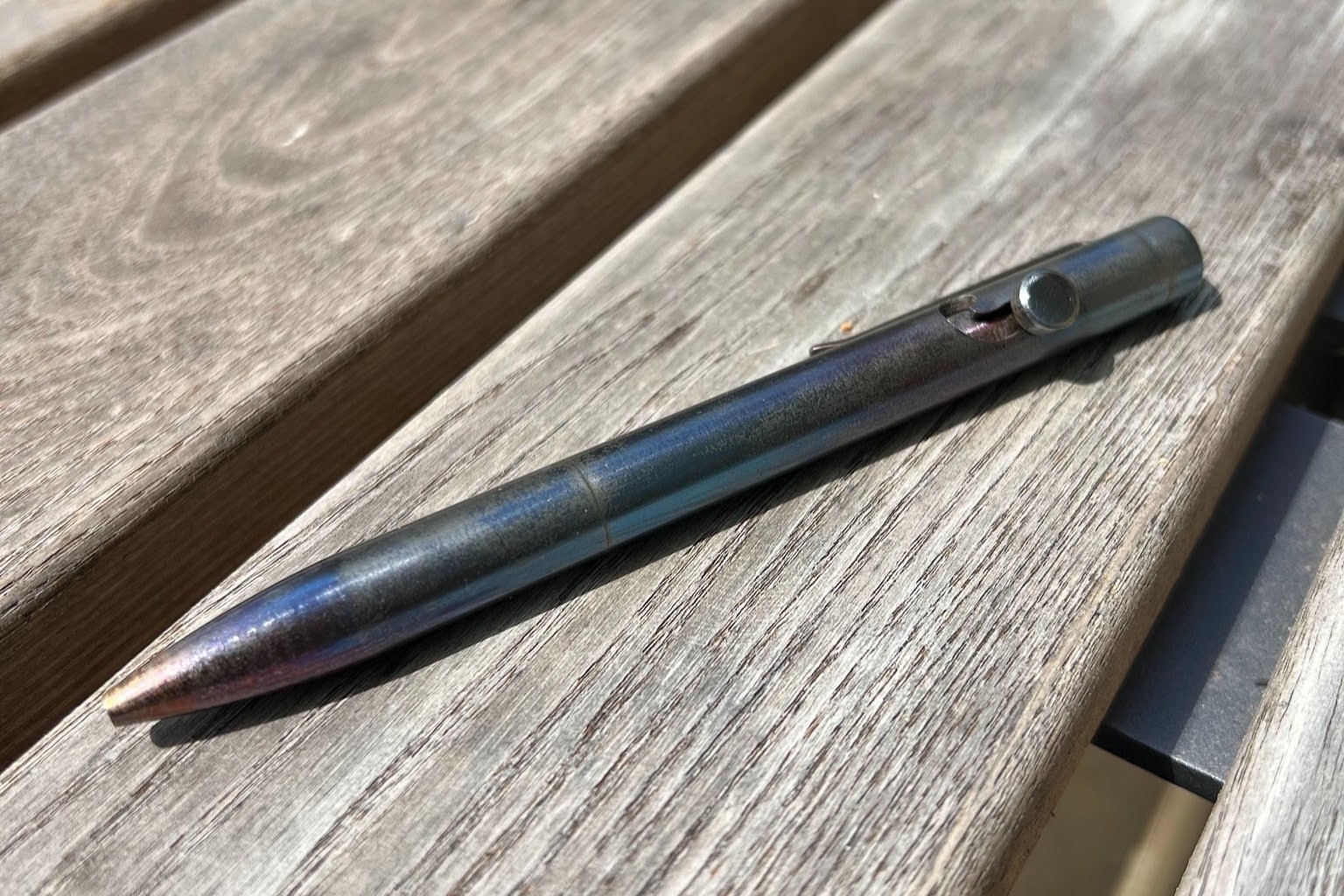
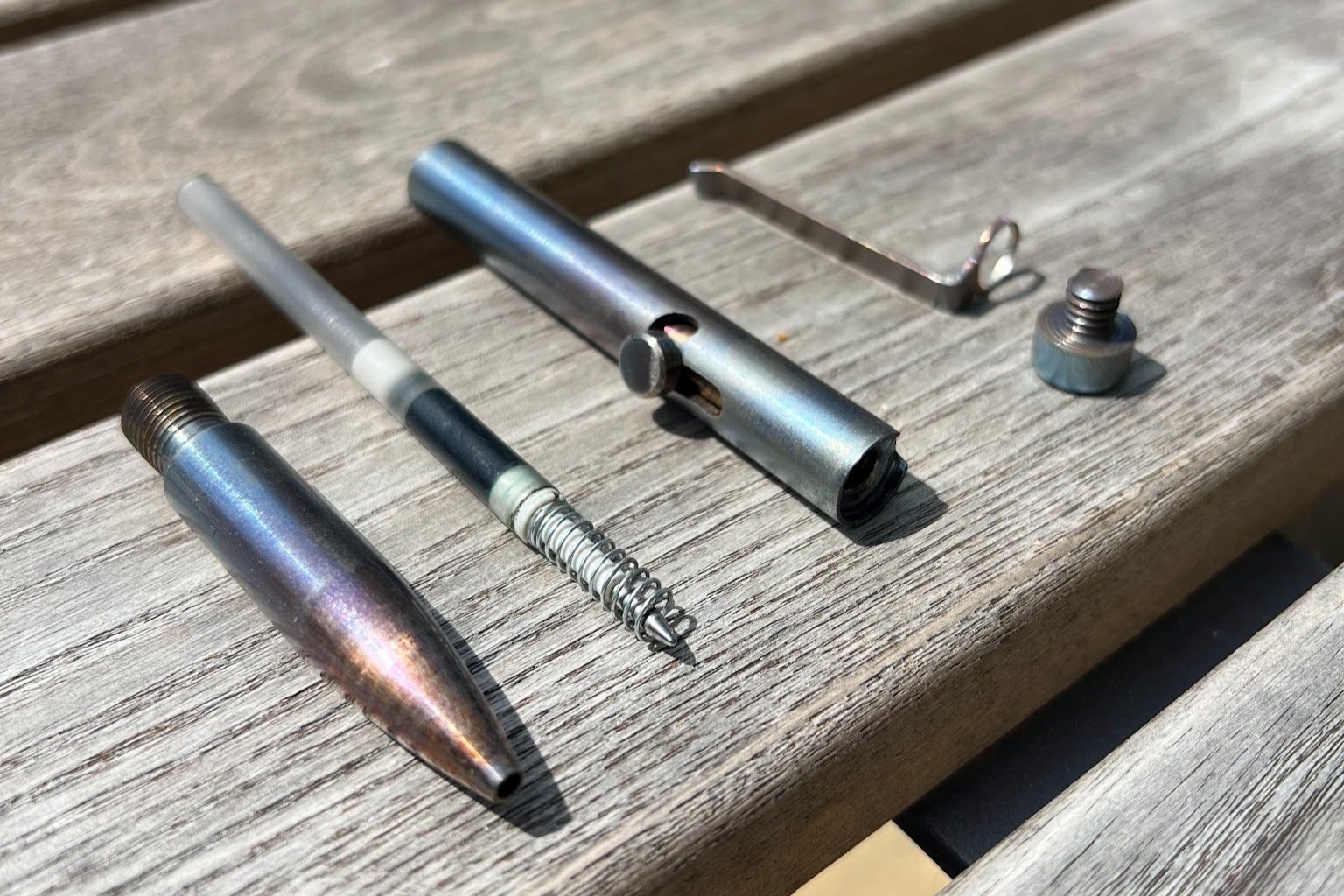
12L14 Carbon Steel
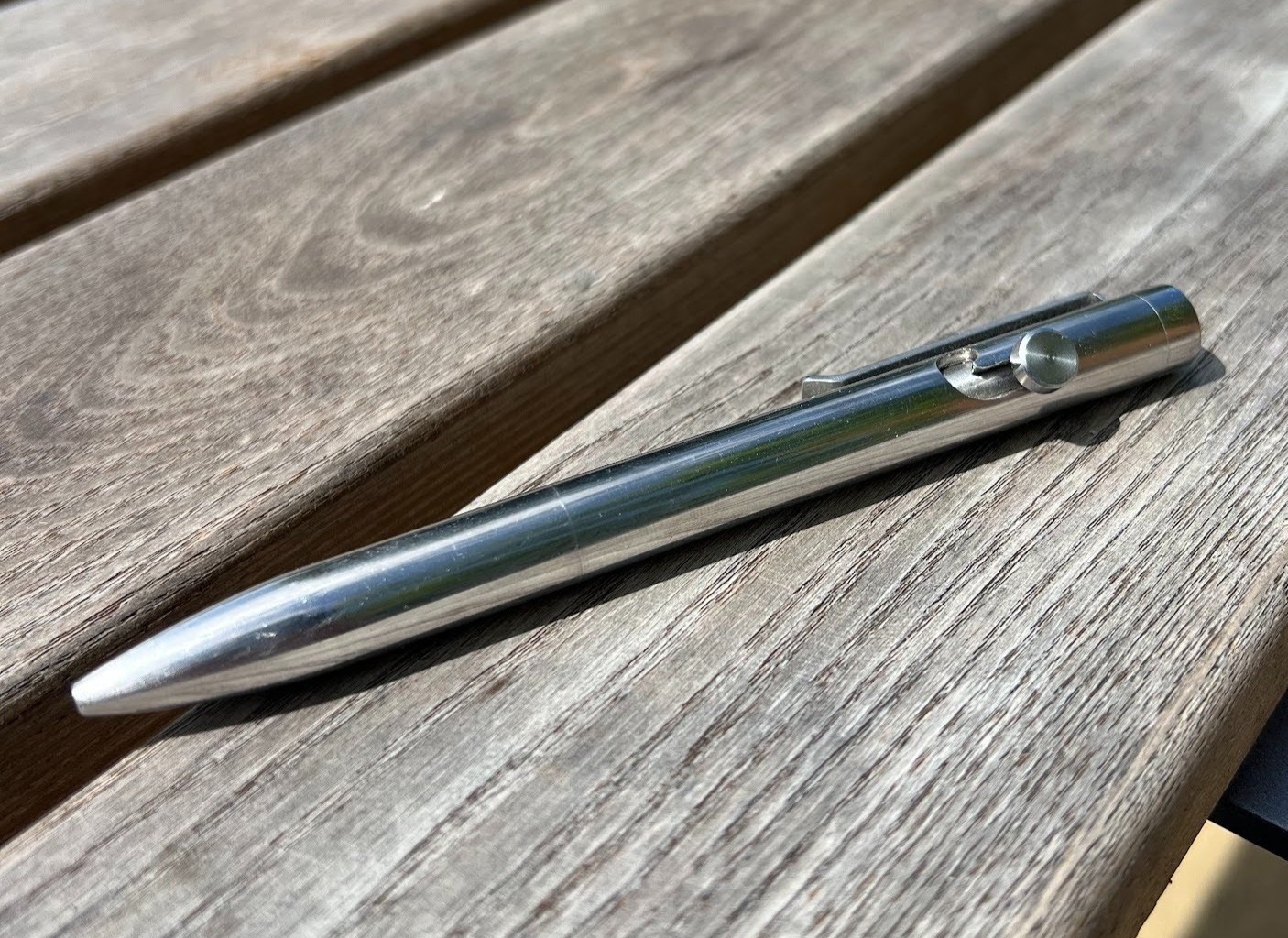
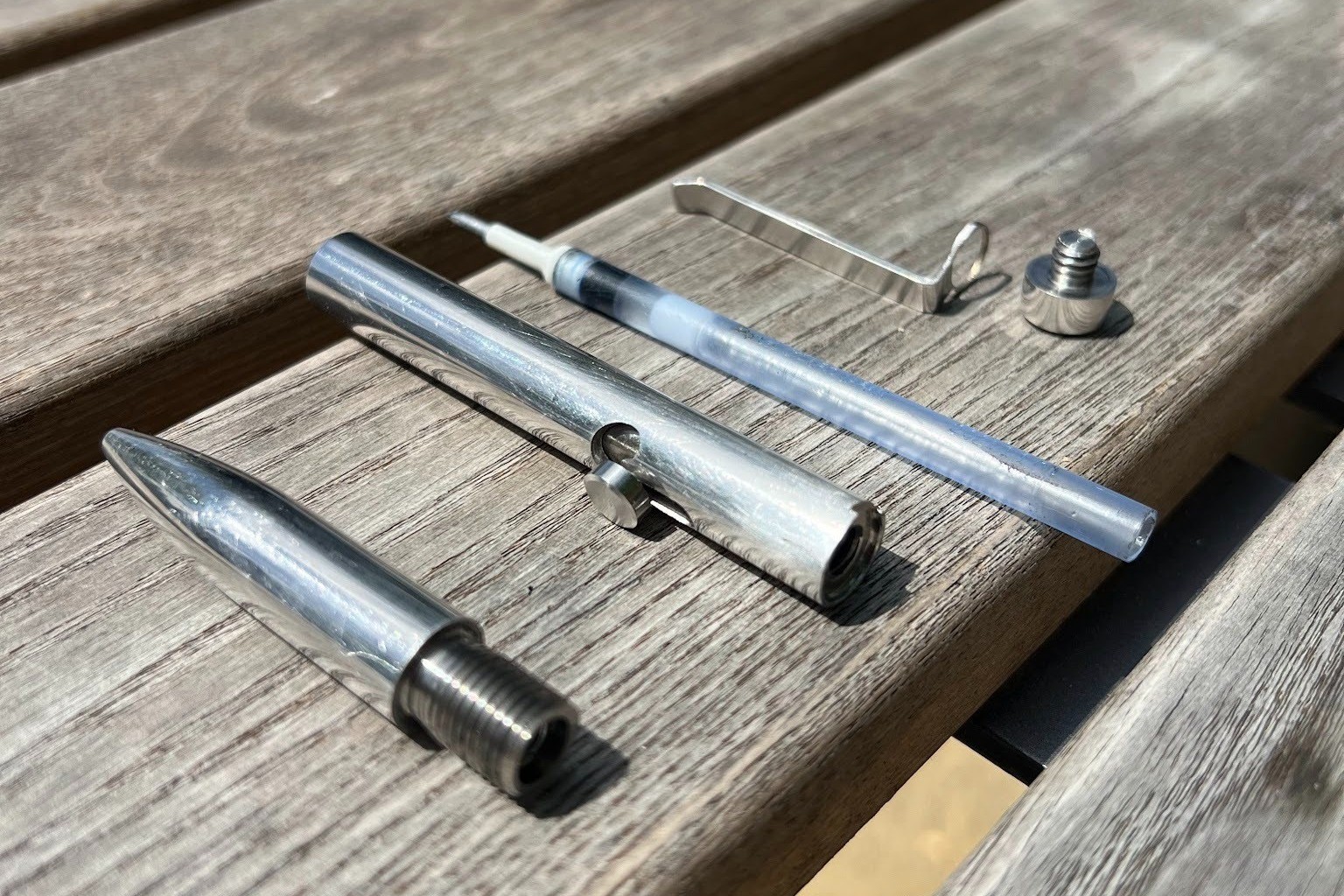
304 Stainless Steel
Project case study
A mechanical design and machining project focused on developing a compact bolt-action mechanism built around precise internal travel, ink cartridge fit, and seamless external appearance.
Overview
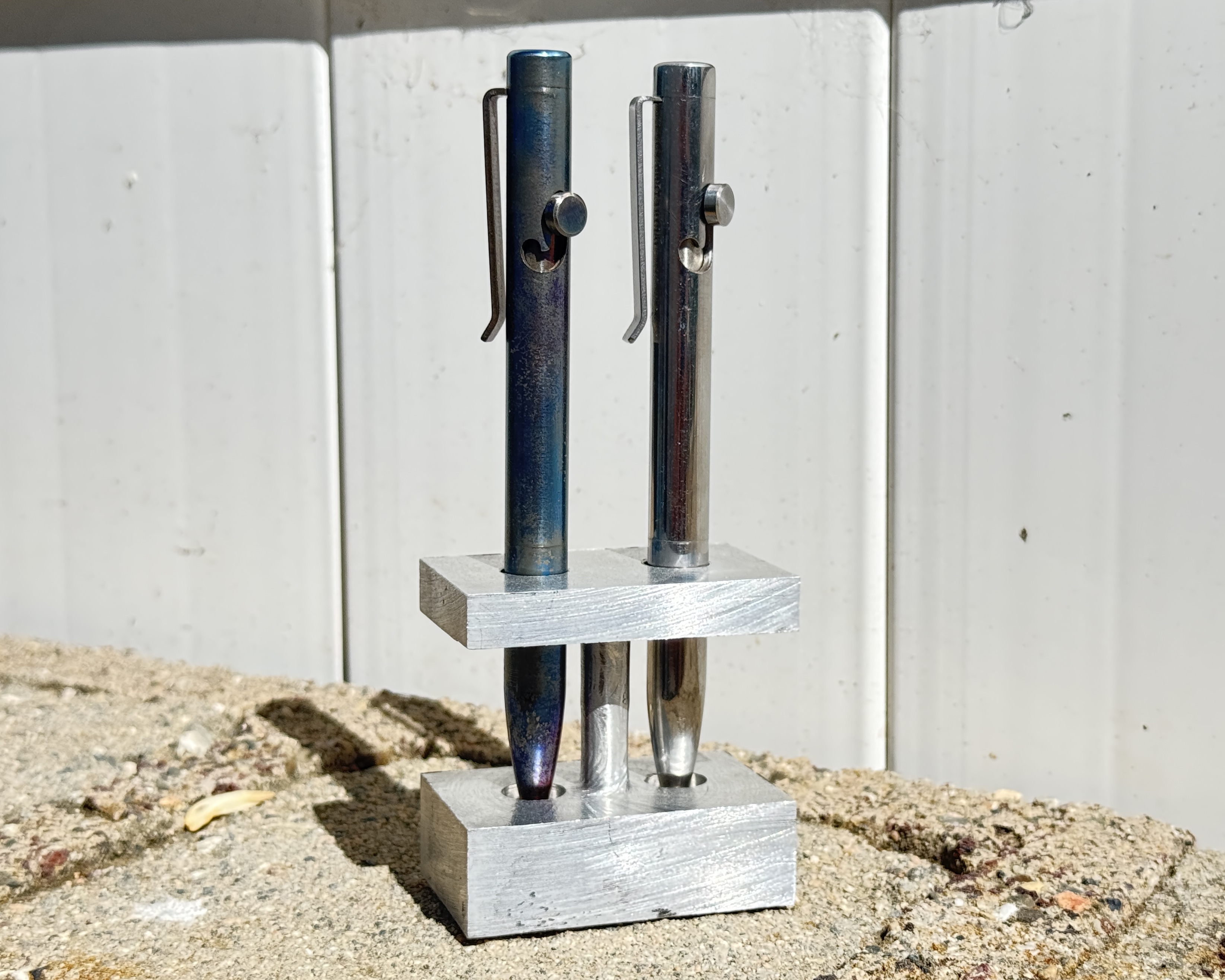
I designed and manufactured a set of everyday-carry pens to better understand the internal geometry, mechanism travel, and component fit behind a spring-loaded bolt-action assembly.
One pen was machined from stainless steel, while the otherwas made from carbon steel to be heat-treated for visible color transition, creating a custom finished appearance.
12L14 Carbon Steel
304 Stainless Steel
Researched pen engagement methods and selected a bolt-action design for its mechanical robustness, tactile feedback, and compact mechanism. Various prototypes were planned to evaluate different materials.
Designed the internal features around a replaceable Pentel EnerGel ink cartridge, which drove the tip, body, and slider geometry. I mapped the J-slot travel to ensure the ink cartridge would not bottom out on the tip’s internal shoulder before full actuation, then sized the remaining components to maintain clearances, prevent binding, and preserve a seamless external form.
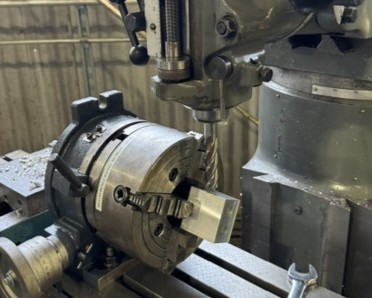
Manually machined the pen tip, barrel, top, slider, and bolt components on a manual lathe and mill. The tip blend was machined on a Haas TL-1 CNC lathe, then the body was assembled and turned to size as a single workpiece with live-center support to create a seamless external appearance. Finally, I machined the J-slot into the barrel on a Haas Super Mini Mill using a rotary chuck.
Cleaned all components. Utilized a blow torch to achieve the desired color transition.
Applied threadlocker to secure the bolt to the slider, then installed the ink cartridge and spring. Iteratively adjusted ink cartridge length to alter required mechanism travel. This improved actuation smoothness while preserving the robustness of the bolt-action assembly.